Crossing the Red Earth Road: Exploring the Ecological Diversity of Nhulunbuy
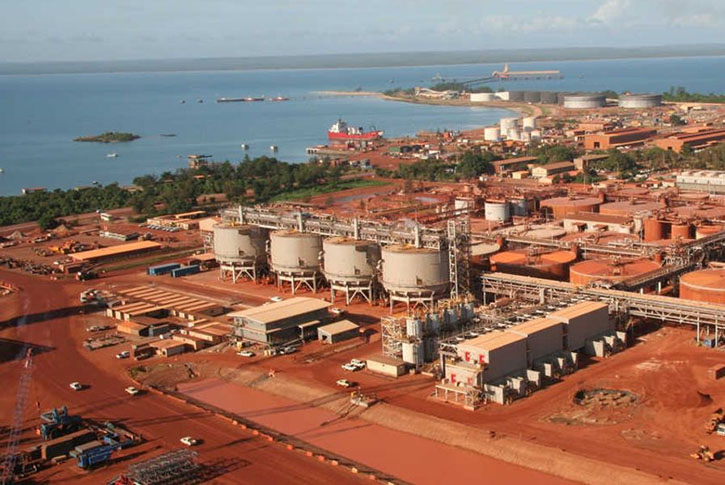
1. Arrival at Arnhem Land’s Edge
The twin-prop engine of the small aircraft roared against the endless stretch of blue sky. Below, a patchwork of ochre earth and deep green mangroves extended like veins across the Top End. Descending into Nhulunbuy, the rust-red ground approached in slow rhythm, framed by eucalyptus forests and coastal fringes that shimmered in the midmorning heat. The runway felt like it had been carved directly into the wilderness, a final point on a map where roads ended and stories began.
Upon arrival, the dry heat wrapped around everything. The air held a scent of gum leaves and salt — something ancient and untouched. The airport was small, efficient, and refreshingly unpretentious. A welcome sign in Yolŋu Matha and English greeted travelers. There was no mistaking it: this was Arnhem Land, and Nhulunbuy stood at the edge of one of the most biodiverse, culturally rich, and environmentally preserved regions on the Australian continent.
2. First Encounters with the Red Earth
Nhulunbuy, a township born of the 1960s mining boom, sits isolated on the Gove Peninsula, fringed by the Arafura Sea. It’s surrounded by Yolŋu land — land that speaks through its silence, sand, and songlines. With permission secured from the Northern Land Council, travel outside the township’s limits offered opportunities to witness country in a way few do.
Driving a 4WD along the red-dirt roads, the first impression came through vibration — the relentless rumble of tires over corrugated tracks. Iron-rich dust rose with every kilometer, coating everything in a fine sienna layer. The air shimmered with heat mirages, the landscape a kaleidoscope of hues: pale barked ghost gums, amber earth, and sapphire skies.
Birds swooped across the windshield — flashes of azure from forest kingfishers, calls from butcherbirds echoing into the trees. Even the roadside, seemingly barren, offered signs of life: wallaby tracks, dingo prints, and the darting shadow of a monitor lizard.
3. The Coastal Transition: Walking Between Salt and Sand
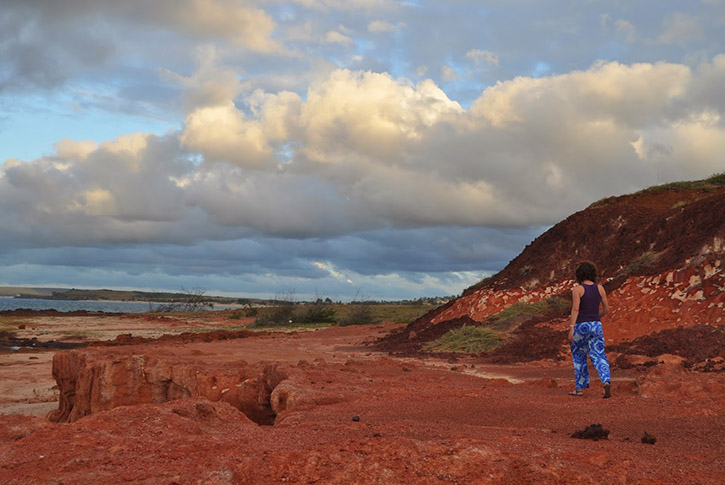
A brief turn off the main track led toward Wanuwuy, also known as Cape Arnhem. Here, the land changed rapidly — eucalyptus forests gave way to pandanus groves, then to coastal heathlands, and finally to a blinding expanse of white sand. The coast curled like an artist’s brushstroke, pale beaches dotted with shell middens, driftwood, and the ancient remains of dugong feasts.
Tidal pools formed in the morning stillness, alive with darting mullet, sand crabs, and even the occasional juvenile stingray. Above the waterline, ospreys nested in skeletal tree limbs, scanning the sea for movement.
Walking barefoot through this coastal corridor, the contrast of textures was arresting — cool wet sand underfoot, dry paperbark leaves falling from trees, and the constant briny tang in the nostrils. The ocean was clear, calm, and deceiving. Saltwater crocodiles are known visitors. The land does not yield to naivety here; respect is the first rule of passage.
4. Monsoon Vine Forests: Pockets of Rain and Shade
Returning inland, the road dipped toward shaded gullies where monsoon vine forests thrive. These are rare patches in Arnhem Land — ecological oases amidst dry savannah. Driving into one felt like slipping through a secret curtain. Suddenly, the light dimmed. Green took over. Air cooled.
Vines looped around banyan trees. The hum of cicadas faded under the chorus of fruit doves and honeyeaters. Here, butterflies danced between fan palms, and the scent of moisture lingered.
Stopping to walk a loop around one of these vine thickets revealed a striking number of species in a compact area. Strangler figs choked host trees with sculptural patience. Orchids hung in unlikely places. Freshwater turtles basked near ephemeral streams, and the mud bore imprints of buffalo — feral yet now a part of the ecology.
There is a sacred stillness in these forests. Time feels suspended. Even the flies are quiet here.
5. Savannah and Woodland: The Dominant Biome
Beyond the forest enclaves, the dominant landscape reasserts itself. Tropical savannah, ruled by stringybarks, speargrass, and cycads, stretches out in every direction. This is not a monotonous biome, as it might seem from a distance. Its rhythm lies in its details.
Termite mounds stood like sentinels, some taller than a man, sculpted with wind-worn symmetry. They were warm to the touch, the clay compact and alive. Overhead, black kites circled — ever-present companions to both fire and movement.
Every few kilometers, burnt earth marked traditional fire-stick farming. This cultural burning not only prevents wildfires but renews the land. Fresh green shoots had already begun to emerge from the ashes. Wallabies foraged close by, emboldened by the recent regrowth. Fire and life, here, are symbiotic.
The landscape swayed with breezes and bird calls. Drongos and rainbow bee-eaters swooped for insects. Occasionally, the deep bellow of a bush turkey echoed through the underbrush.
6. Wetlands of Cato River: Breathing Life into the Land
The track toward the Cato River wetlands presented a subtle transformation. The air thickened with humidity. Water replaced dust. The roar of frogs emerged — green tree frogs and barking frogs in full voice. Dragonflies hovered over reeds like miniature helicopters.
Wetlands, though seasonal, are vital arteries in this region’s ecology. They support a dizzying array of life. Jabirus stepped carefully through the water margins, while magpie geese lifted in noisy flocks overhead. Agile wallabies drank cautiously along the edges, scanning for crocodiles and snakes.
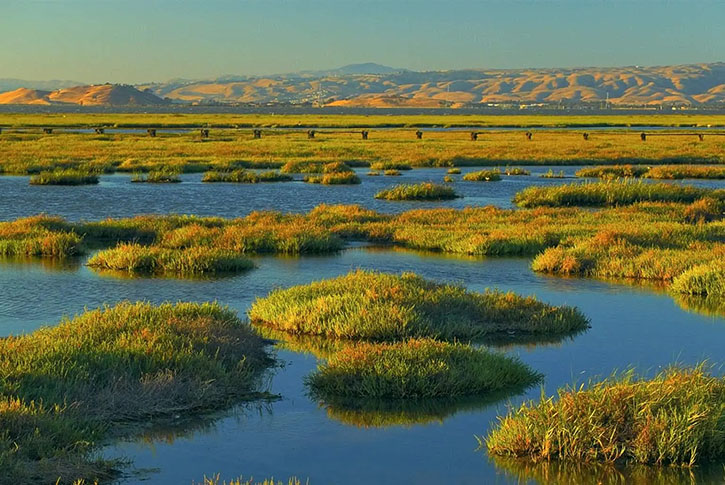
Standing at the edge of a billabong, the water calm and reflective, one could see clouds mirrored in its surface and time stretched in both directions. These pools are more than ecosystems — they are repositories of memory. Their shores told stories in bird tracks, drift patterns, and the residual ash from last year’s ceremonies.
7. Cultural Ecology: Where People and Land Are One
Ecological diversity in Nhulunbuy cannot be understood apart from its cultural guardians. Yolŋu knowledge informs the balance between land, water, and sky. Through kinship with country, the local clans pass down ecological knowledge that science still seeks to quantify.
Near Yirrkala, an art centre displayed bark paintings and larrakitj that depicted the seasonal cycles of bush foods, monsoons, and animal migrations. Each motif carried embedded ecological logic. The stories weren’t metaphor — they were science encoded in ceremony.
Later, with a local guide, it became possible to taste this knowledge. Walking through bushland, he pointed to plants by their Yolŋu names, revealing uses: astringents, bush soaps, fish poisons, or treatments for infection. Leaves became medicine, bark became canvas, and landscape became library.
Gathering oysters on the rocks, he spoke about tides and moon phases, of when sea turtles lay eggs and when mangroves flush with prawns. The knowledge was observational, refined over millennia, and deeply aligned with ecological rhythms.
8. The Night Chorus: Life After Sunset
As the sun dipped below the eucalyptus line, the transformation was immediate. Insects began their calls — a layered, orchestral hum. Nightjars swooped low across the tracks. Geckos emerged onto walls and tree trunks, clicking softly.
A campfire near the edge of the escarpment threw light in flickering circles. The smell of burning sandalwood mixed with the salt air. In the distance, cane toads called — invasive, but now part of the nocturnal rhythm.
Bats replaced birds. Owls, especially the masked owl, called with eerie precision. The wind dropped, and the bush became alive in a different register. Torchlight revealed glowing spider eyes, hopping frogs, and the occasional movement of wild pigs in the undergrowth.
Sleeping under the stars, the sky opened wide. The Milky Way arched overhead like a bridge. Every sound had presence. Every rustle had meaning. It wasn’t just the absence of noise that defined the night, but the deliberate sequence of its inhabitants’ voices — life announcing itself one breath at a time.
9. The Journey Outward: Retracing the Red Earth
Packing the vehicle to depart meant shaking off layers of red dust from gear, skin, and clothing. The car, once white, now matched the soil. The body felt slow, lulled by the cadence of days filled with wind, heat, and silence.
Driving out, everything seemed both familiar and unfamiliar. The red earth, unchanging yet subtly alive, held textures I had missed on arrival. Termite mounds caught light in new ways. Birds I had once struggled to identify now felt like companions. Even the winding road felt like a pulse line, not merely a path.
At a final lookout, the escarpment opened wide. Below lay coastal floodplains and vine forests, woodlands and winding rivers — all woven into one narrative of coexistence. The horizon didn’t end, it curved.
The ecology of Nhulunbuy is not a collection of species or landscapes. It is a living, breathing mosaic — one where tides and trees, fire and frogs, humans and hollows all form part of an indivisible whole.
1. Arrival at Arnhem Land’s Edge The twin-prop engine of the small aircraft roared against the endless stretch of blue sky. Below, a patchwork of ochre earth and deep green mangroves extended like veins across the Top End. Descending into Nhulunbuy, the rust-red ground approached in slow rhythm, framed by eucalyptus forests and coastal fringes…