Soaring Over the Outback: A Journey to Nhulunbuy in a Small Aircraft
1. The First Glimpse of the Red North
It started with an early morning in Darwin. The kind of morning where the air is already warm and smells faintly of eucalyptus and salt. The birds, exotic and unfamiliar to the southern cities, chirped as if rehearsing a play written by nature itself. My duffel bag sat obediently in the corner of the room, ready for a flight not of mere convenience, but of experience.
My destination was Nhulunbuy, a remote coastal town nestled on the Gove Peninsula in East Arnhem Land. Unlike flying into Sydney or Melbourne, getting to Nhulunbuy is an invitation into a part of Australia rarely seen by most. I had booked my flight on Airnorth, through the Skyscanner platform, which offered not only flexibility but also the lowest fare after cross-checking with other aggregators.
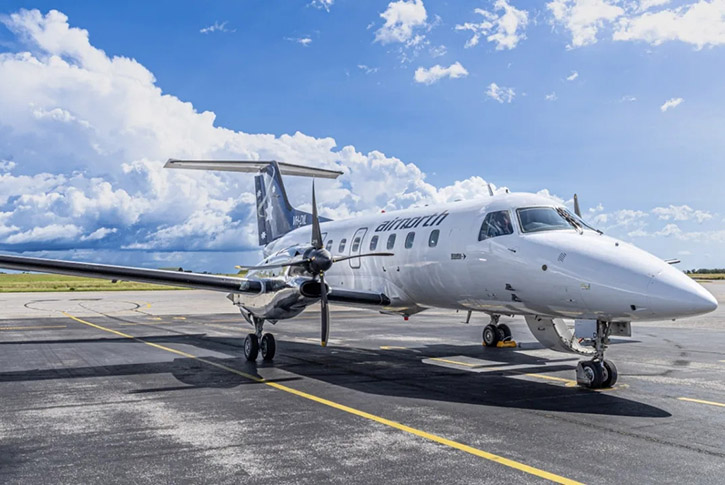
The flight wasn’t just a means of arrival—it was to be a story in itself. Airnorth operates smaller aircraft on this route, designed not for luxury but for efficiency and access. Boarding one feels more like stepping into a private charter than a commercial flight. There’s something inherently intimate about a cabin with fewer than 40 seats, no separation from the cockpit, and a view out of the window that spans wild, untouched country.
2. Walking Across the Tarmac
Darwin Airport bustled quietly that morning, without the chaos of major international hubs. The regional terminal was compact, well-organized, and ran on the efficiency typical of the Territory: direct, no-nonsense, and dependable. After check-in, I waited in a departure lounge that still carried the scent of ground coffee and Jet A-1 fuel. Out on the tarmac, the Airnorth Embraer 120 Brasilia—a twin-turboprop, proud and sturdy—waited beneath a brightening sky. Its nose pointed like a compass needle, ready for the northeast.
Boarding was a walk across the hot tarmac, sun bouncing off the aircraft’s silver skin. No jet bridge, no enclosed gates—just open air and a short flight of metal stairs. There was a tangible sense of occasion stepping into that cabin. It hummed gently, like it was alive.
The crew greeted each passenger with a smile that didn’t seem manufactured. No corporate pleasantries, no hollow formality—just genuine Territory warmth. There was no first class, no premium economy. On this aircraft, every seat was a front-row ticket to some of the most spectacular vistas on Earth.
3. Takeoff Over the Top End
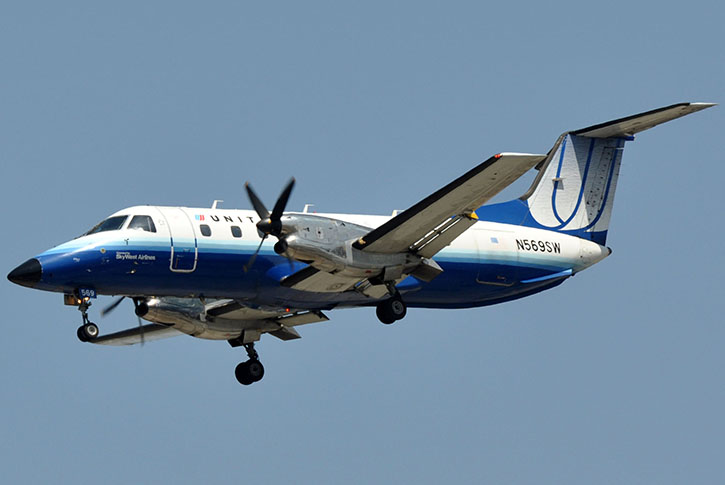
Strapped in with a four-point harness and watching the pilot complete the checklist not three meters from my seat, the engines revved with a throaty rumble. The Embraer taxied swiftly, then paused at the end of the runway as the captain announced, calmly and with the barest trace of an accent, that we’d be taking off toward the east.
And then, we were airborne.
The moment of liftoff in a smaller aircraft differs from commercial jets. It’s more tactile, more personal. You feel the grip of the wheels let go of the earth. The body tilts forward slightly before the lift grabs hold, pulling you skyward. The landscape below doesn’t shrink away—it unfolds.
From above, Darwin sprawled out into the bush like spilled paint—low buildings, wide roads, pockets of green. The Arafura Sea gleamed, shallow and turquoise along the edges. We banked gently, and suddenly the city disappeared, swallowed by the wild.
4. Into the Red
The flight to Nhulunbuy takes just under two hours. But in that span, time seems to expand.
Minutes out of Darwin, the bush begins its dominion. Endless expanses of red ochre, green gum forests, twisted rivers, and cracked salt flats form a patchwork so vast it defies comprehension. The view through the oval window became less like scenery and more like watching the living skin of a continent.
Occasionally, I caught glimpses of dirt tracks vanishing into the trees. No houses, no towns—just the geometry of nature and the occasional sign of human exploration. It felt like flying over a forgotten planet. My eyes never left the window.
Clouds cast great shifting shadows below, darkening one ridge while illuminating another. The light played tricks. One moment the ground looked velvet soft, the next like broken glass. From 20,000 feet, the land whispered its history.
5. The Silence Between Towns
There’s a silence up there that’s not the absence of noise but the presence of something older. The aircraft vibrated faintly, a low, consistent hum. No inflight entertainment, no announcements, no food carts—only the hum, the view, and the awareness of space. A few other passengers dozed off or read from dog-eared novels. One man near the back wore a high-vis vest and boots, likely heading to a mining site or a ranger station. This wasn’t a tourist crowd. This was a Territory crowd.
I turned to look forward. The cockpit door was open, as it often is on these flights. From my seat, I could see the backs of the pilots’ heads, hands flicking switches, eyes scanning dials. Beyond them, the sky stretched out in blue and white. It felt secure, human, unpretentious.
We passed over the Rose River, its curves reflecting the sun like a slithering silver snake. The land began to shift subtly—more trees, more green, and a hint of distant hills.
6. The Descent into Nhulunbuy
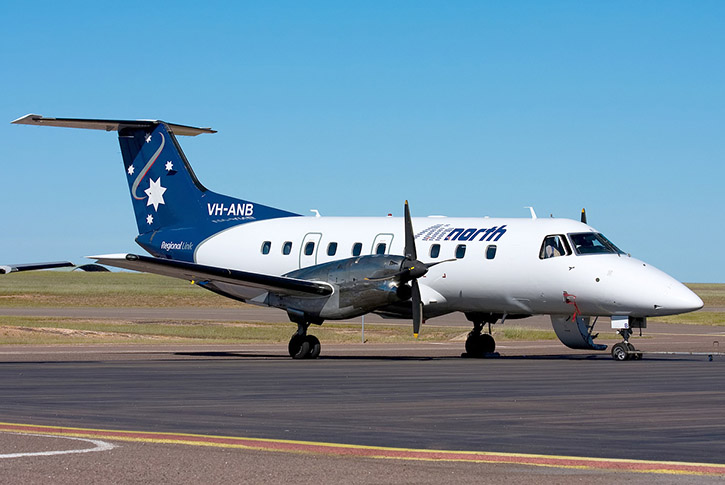
Approaching Nhulunbuy was like watching a secret reveal itself.
From high above, the Gove Peninsula cuts into the sea with jagged grace. Beaches curved around coves, and mangroves clawed at the waterline. The wilderness seemed to press all the way to the ocean, barely interrupted by human hand. Then, suddenly, a hint of a runway emerged—straight, grey, unapologetically manmade in a world of organic shapes.
The aircraft descended in a long, slow glide. There were no cityscapes to see, no suburbs, no highways. Just bush, then bush again, then tarmac.
Touching down in Nhulunbuy was smooth and gentle, as though the plane was relieved to have landed after crossing that vast emptiness. The engines wound down, and the door opened to a rush of hot, salty air. The kind of air that sticks to your skin and reminds you that you’re somewhere truly remote.
7. Arrival on the Edge of the Continent
The airport was more airstrip than terminal. A squat building with a single belt and a parking lot dotted with Land Cruisers. People greeted each other by name. No suits, no taxi queues. Just practicality and presence.
The sun bore down overhead. My bag came out quickly, slung across the back of a metal trolley wheeled out by a single attendant. There was no rush to leave, no pressure. Only the sound of birds and the occasional engine turning over.
Outside the airport, the trees reached out, tall and tangled. The road into town was a ribbon of black surrounded by green and red. It felt less like arriving in a town and more like arriving in someone else’s world—one that had little interest in cities or schedules.
8. Reflections at 3,000 Feet
The flight lingered in my mind long after touchdown.
There’s something elemental about flying over the Northern Territory in a small aircraft. It removes the barrier between you and the land. There’s no curated window into nature—only the full, unfiltered vastness of it. Every kilometer flown is a kilometer understood in silence.
The sensation of being so close to the pilots, of watching the land roll beneath in unending waves, of touching down in a town unreachable by highways—all of it makes the journey as much a destination as Nhulunbuy itself.
9. The Land Below: Memory and Texture
Looking back on the flight now, what remains isn’t just the memory of the route but of the texture of that landscape. The cracked mudflats like shattered pottery. The dense green bush rising like breathing lungs. The way the rivers glinted briefly, then disappeared. The knowledge that so much of that land has never seen a road.
There was no commentary, no guide explaining the terrain. The land spoke for itself. Every turn of the propeller, every tilt of the wing was framed by this ancient geography, still holding the weight of its dreaming stories.
10. Onward, Without Rush
Nhulunbuy offers many experiences: the Yolŋu culture, the beaches, the mangroves, the walking tracks, the red dust clinging to your boots. But long before I set foot in town, the journey had already begun writing its own chapter.
That small aircraft from Darwin didn’t just take me to a location. It offered me a seat beside the sky, a window into the Northern Territory’s soul. Not polished, not embellished, but raw, real, and unforgettable.
1. The First Glimpse of the Red North It started with an early morning in Darwin. The kind of morning where the air is already warm and smells faintly of eucalyptus and salt. The birds, exotic and unfamiliar to the southern cities, chirped as if rehearsing a play written by nature itself. My duffel bag…